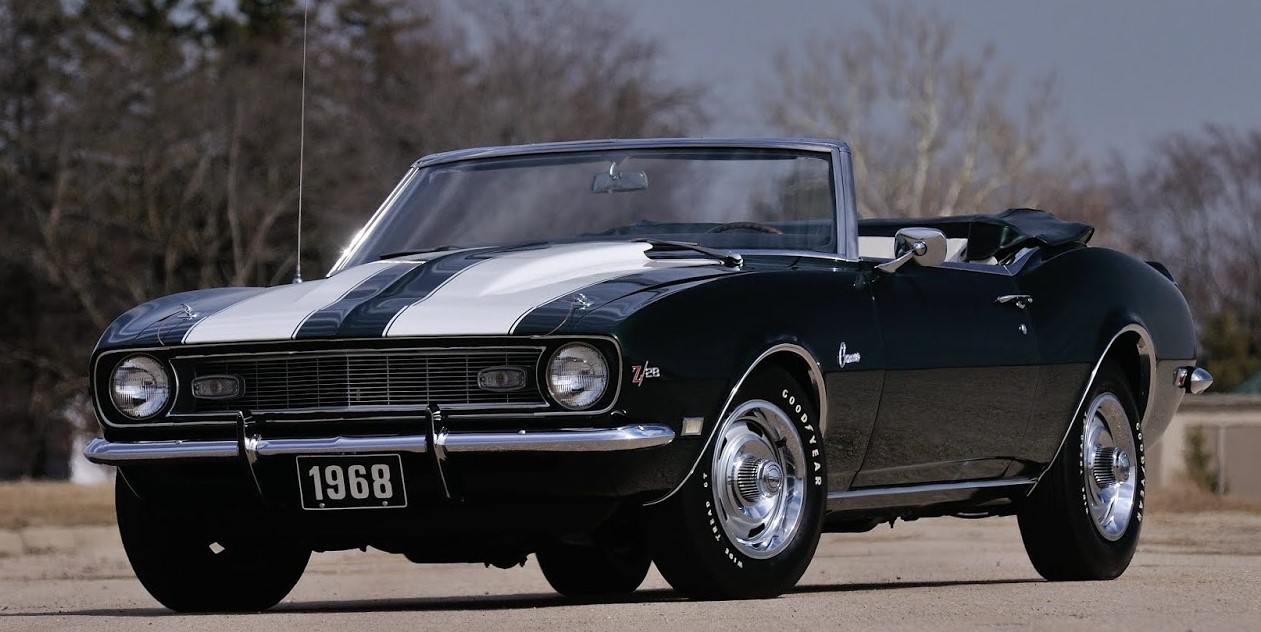
| C R G | CRG Reports | Exterior | Engine | 1967 Model ID |
| Numbers Decode | General Info | Interior | Transmission | 1968 Model ID |
| Drivetrain Decode | Options | Underhood | Chassis | 1969 Model ID |
CRG Research Report - © 2026, Camaro Research Group
The First Generation Camaro Z28
Primary Authors - Bryon Miller and Jerry MacNeish|
Reviewed by the CRG Last Edit: 26-Mar-2026 Previous Edits: Original Release: 26-Mar-2026 |
The first-generation Camaro Z28 has become iconic over the years and is a highly desirable car. The package was basically the same all three years, including a high-revving 302 engine, heavy-duty radiator and temperature-controlled fan, 12-bolt axle, quick-ratio steering, special suspension, rear bumper guards, dual exhaust, rally stripes, and 15-inch rally wheels (all other Camaros had 14-inch wheels). An aluminum-cased Muncie 4-speed transmission and power-assisted front disc brakes were required options. Automatic transmissions were not available with the Z28. Positraction was recommended, but not required.
Vince Piggins, Chevrolet manager for product promotion, is generally considered the father of the Z28. Without Vince, it is possible that the package may have never been implemented. These cars were developed so Chevrolet could have the Camaro compete in the Sports Car Club of America (SCCA) sedan class known as Trans-Am. The limit for the class was a 5.0 liter or 305 cubic-inch engine. Chevrolet did not have an engine close to this displacement, so an old hotrodder setup was utilized. Racers used to take a 283 cubic-inch engine (with a short 3.00-inch stroke) and bore the cylinders 0.125 over to 4.000 inches, creating a high-revving engine. The United States Auto Club (USAC) Sprint cars had also used this combination.
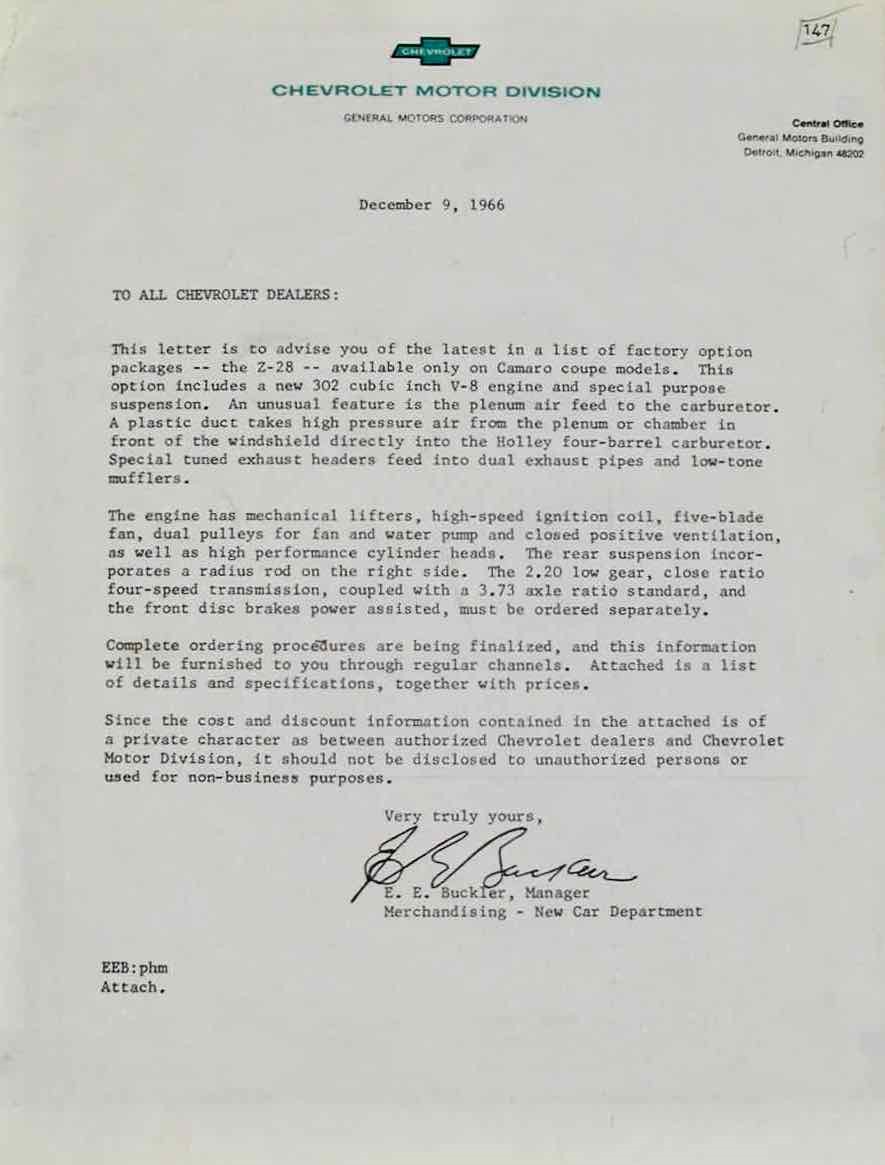
The Z28 was not available at the start of the 1967 model year. It was a mid-year package, Regular Production Option (RPO) code Z28, that became available in December 1966. The first deliveries were in January 1967. Here is a link to the Chevrolet Motor Division letter to all Chevrolet dealers to introduce the Z28 option package. 1967 Z28 Introduciton Letter.
The 302 Chevrolet engine had a 4.002-inch bore 327 block. A 3.005-inch stroke forged and tufftrided crankshaft was utilized. The engine was very conservatively rated at 290 hp at 5800 RPM, but the power band went much higher. Other components included a Duntov 30/30 solid-lifter camshaft (called that because of the 0.030-inch valve lash for intake and exhaust) that had been used in fuel-injected Corvettes, camel-hump heads with 2.02 intake/1.60 exhaust valves, aluminum dual-plane high-rise intake manifold, domed 11:1 forged aluminum pistons (impact extruded), a single 780-cfm Holley four-barrel carburetor, and deep-groove pulleys. All of the 1967 and 1968 Z28 engines received 2-bolt main caps (small journal in 67 and large journal for 68 and 69). All Z28 engines received 4-bolt main caps for the 1969 model year.
All 1967-1969 Camaros were built as coupes, except for a very special 1968 Camaro Z28 convertible. It was a 1-of-1 Camaro ordered by Vince Piggins to give to Chevrolet’s General Manager E. M. "Pete" Estes because Estes loved convertibles. It was built on the Norwood assembly line on July 15, 1968. Options on that car included power windows, remote outside mirror, custom seat belts, a blue-light AM/FM stereo system, rear window defroster and more. The car was sent to the GM Tech Center where some special parts were added there - including a prototype fiberglass cross-ram hood and four-wheel disc brakes. The car is currently in a private collection.
|
|
|
|
The very first Z28s were built in late December 1966 and received a 4P code on the firewall tag. This lasted only a short time and then 1967 Z28s received a 4L code on the body tag. The earliest cars went to favored dealerships specializing in high-performance cars and to well known racers. Engine codes for 1967 were MO for the standard 302 and MP for the 302 with smog equipment. 602 Camaros received the Z28 package for the 1967 model year.
Valve covers were chrome on the 1967 Z28 engine with the word Chevrolet in the center. In addition to the standard engine configuration, in 1967, a plenum-air intake system and exhaust headers could be ordered. These items were furnished "loose" - they were not installed on the car at the assembly plant. Price for the base package was $358.10. Adding the plenum-air intake bumped the price to $437.10. Adding just headers brought the cost to $779.40. Including both the plenum-air intake and headers added $858.40 to the total package price. Headers for 1967 were supplied by Bill Thomas Race Cars. In 1967, only the M21 Muncie close-ratio 4-speed transmission was available with the Z28.
All 1967 Camaros, including the Z28, received mono-leaf rear springs. They received a round bar radius rod in early production, but started using the rectangular bar in early March 1967. Here is more information on 1967 radius rods.
None of the 1967 Z28s received a Z28 emblem or an engine-size type emblem. Rally stripes were the only exterior clue. If the Rally Sport appearance package was also ordered, lower case rs emblems were placed on the front of the fender. Wheels for 1967 were 15x6-inch rally-style with 7.35x15-inch red-stripe or white-stripe tires. RPO J52 front disc brakes (with rear drum brakes), and RPO J50 power-assisted brakes were required. Tachometers were optional, but when ordered usually had a 6000 RPM redline and a 7000 RPM maximum.
RPO J56 was a heavy-duty brake option for the Camaro available only on the 1967 Z28. This option consisted of front discs and rear drums with heavy-duty features added to these components. According to Chevrolet records, only 205 examples were sold that year. More information can be found in the metallic brake article.
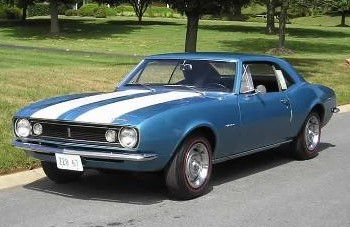
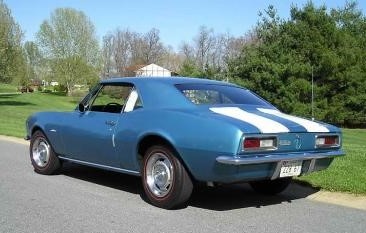
An excellent example of a 1967 Z28 with Marina Blue exterior, and black interior owned by Jerry MacNeish is shown below.
 |
 |
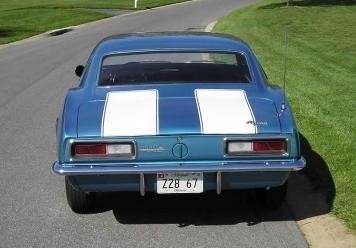 |
| Different views of a Marina Blue 1967 Z28. Photo credit: Jerry MacNeish. | ||
Exterior features changed only a little for 1968. Rally stripes were still standard. 302-engine ID badges were added to the front part of the fender until early March 1968. After that, the 302-engine emblem was replaced with a Z/28 emblem. The price for the base Z28 package increased to $400.25. The plenum-air intake system and headers were again available as options, but only for early part of the 1968 model year. These were discontinued as of January 19, 1968. Adding the plenum-air intake bumped the price to $479.25. Prices for adding just headers, or adding both the plenum-air intake and headers stayed the same for 1968 compared to 1967. The only engine code for the 302 for 1968 was MO, since all Z28s received smog equipment. Headers for 1968 were provided by Kustom.
Valve covers were changed for 1968. These were basically the stock valve covers used on other small-block engines, except they were chrome. They were also used on 1968 SS350 Camaro and some of the 1968 Corvette 327 engines.
In 1968, the Muncie close-ratio M21 was still the transmission usually paired with the 302 engine, but the wide-ratio M20 and the heavy-duty close-ratio M22 were optional. All Z28s for 1968 (and 1969) received multi-leaf springs (and offset shocks) with the 12 bolt axle. Generally, Z28s used 4-leaf springs and the other multi-leaf spring applications used 5-leaf springs. Spring selection was a function of weight and options. Some original SS and L30/M20 cars with 4-leaf springs have been observed. RPO J52 front-disc brakes (with rear drum) automatically included power assist in 68 and 69. Tachometers were optional, but when ordered had a 6000 RPM redline and a 7000 RPM maximum.
There is no coding on the 1968 Camaro body tag to identify a Z28. Production increased considerably for the 1968 model year. A total of 7,199 units were produced. The majority of those were in the last one-third of the model year.
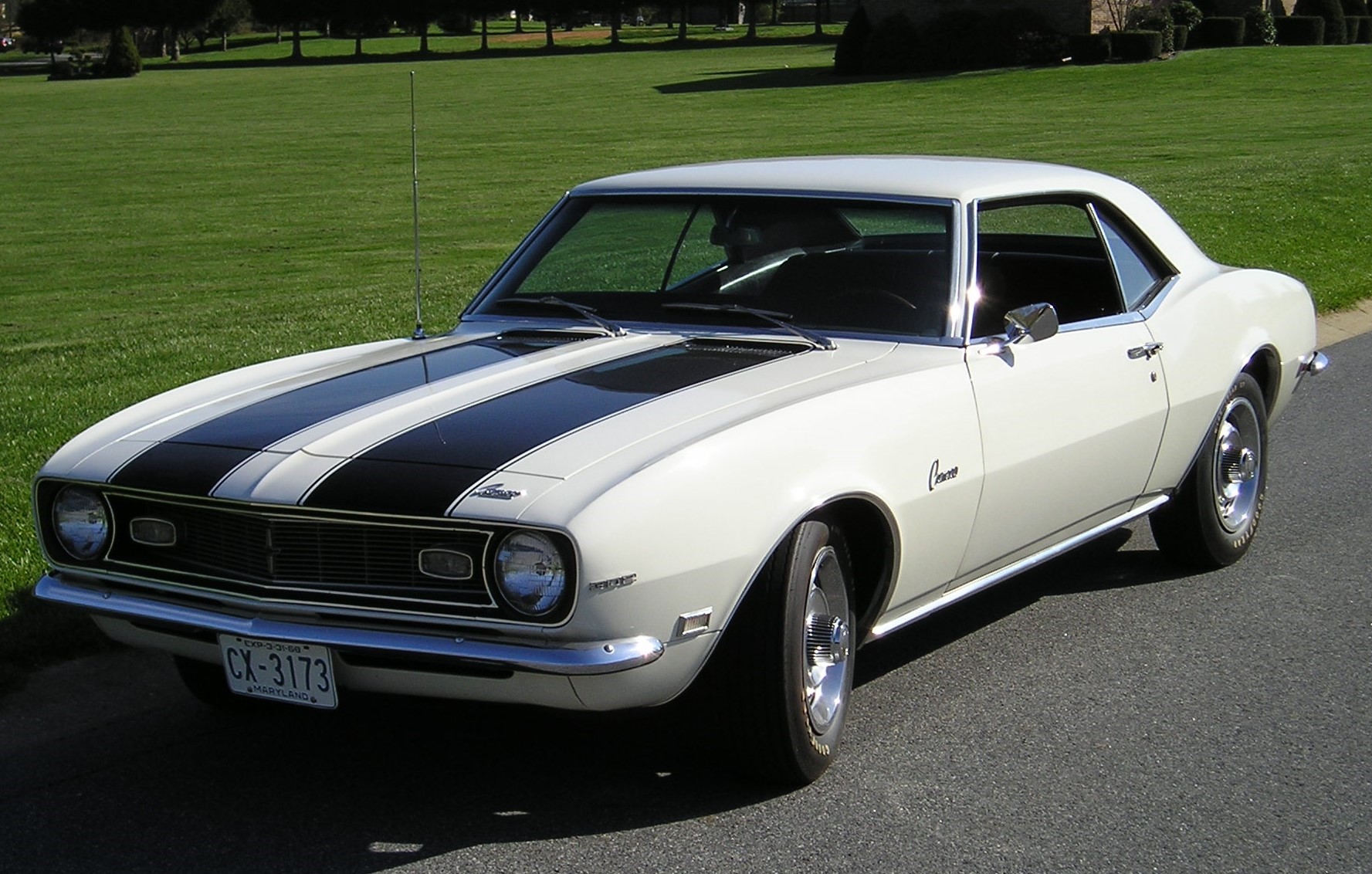
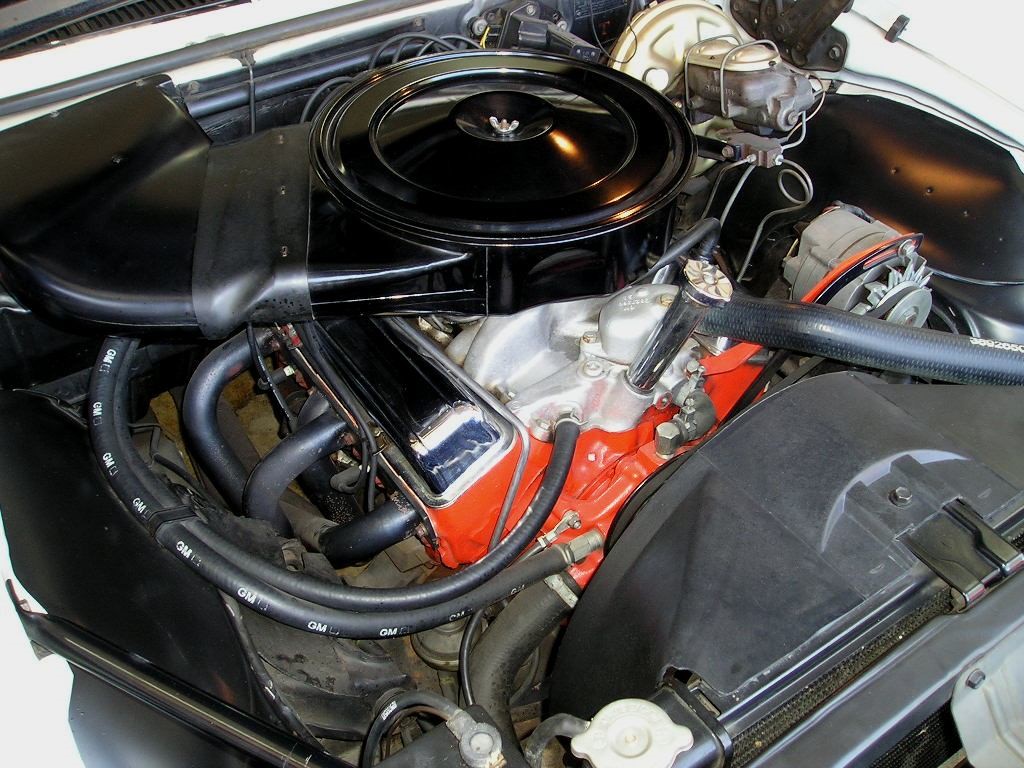
Jerry MacNeish purchased the 1968 Camaro shown below in 1990. The original owner was involved in performance and street racing. That is why the car has the Z28-4 package, which consisted of the plenum-air intake system and headers. It also has the heavy-duty close-ratio M22 4-speed transmission and a 4.88-ratio rear axle. According to Chevrolet records, only 87 Z28s were produced with plenum-air intake and headers in 1968, making it quite rare. And a very expensive option, $858.40 to be exact. This all-original survivor Z28 has been shown at several Camaro Nationals events since Jerry purchased it. It scored a silver award in the original survivor class. When the car was purchased in 1990, the car had 22,000 miles. Only about 3,000 miles have been added on this very special 1968 Z28 Camaro in the last 36 years.
 |
 |
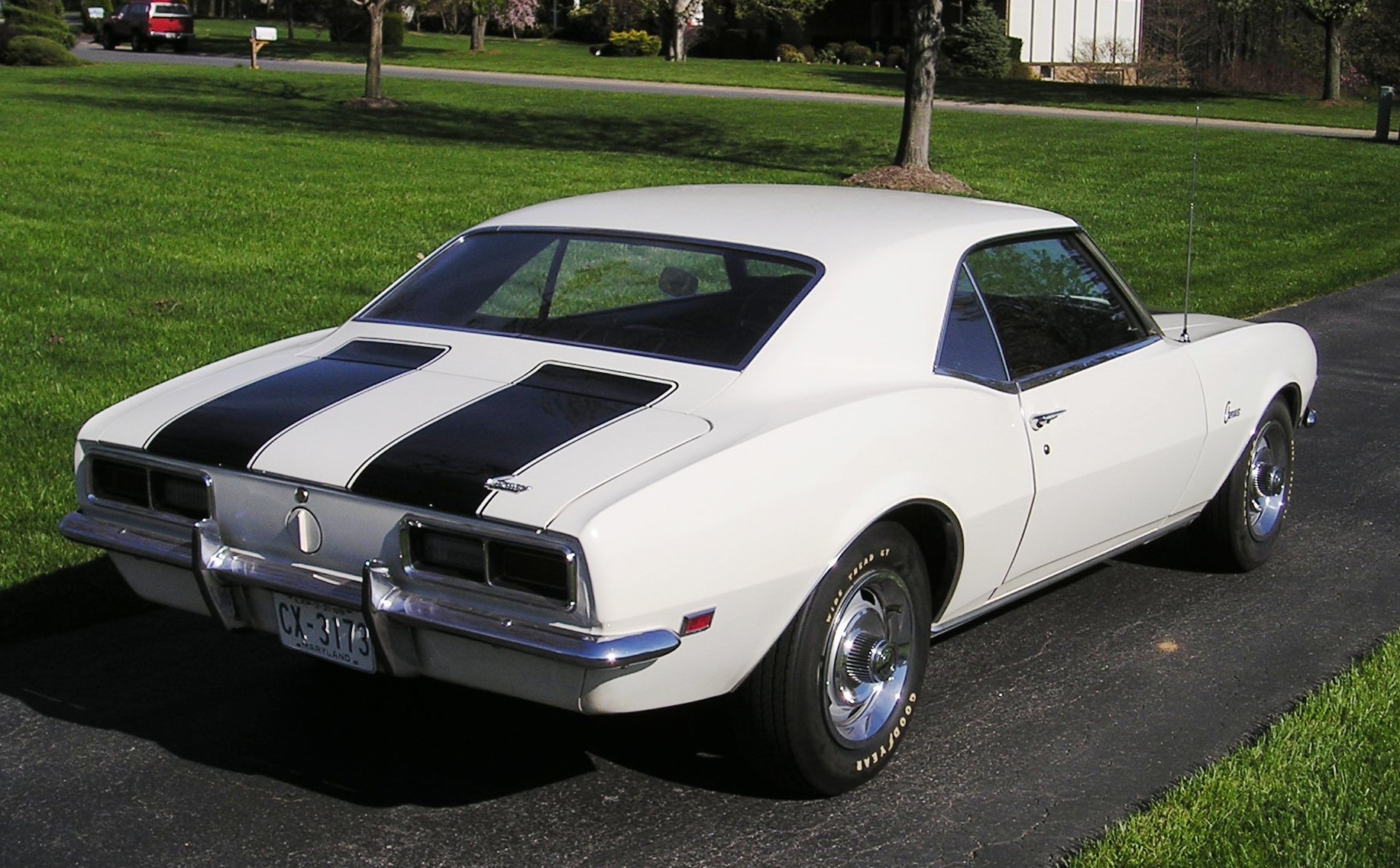 |
| Different views of an Ermine White 1968 Z28. Photo credit: Jerry MacNeish. | ||
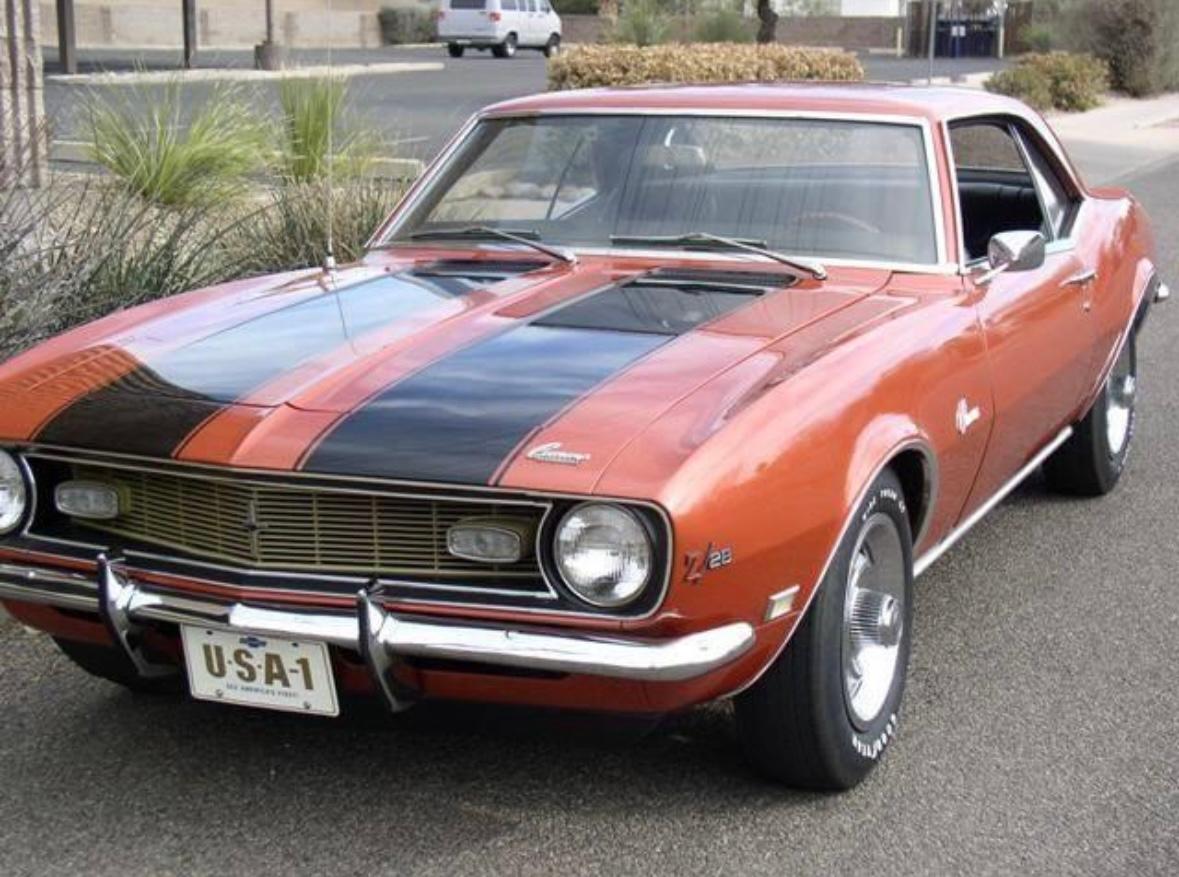
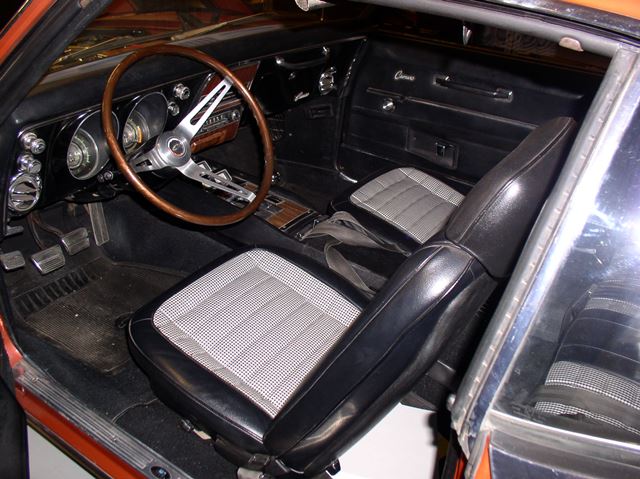
The Corvette Bronze 1968 Z28 Camaro shown below was originally built with an M21 Muncie 4-speed transmission and a 4.56 positraction rear axle. It was sold new in Tucson, Arizona. Joe became the 9th owner in March of 1976. At that time, the original engine and transmission were gone. This is not uncommon, in fact 1968 Z28s with original drivetrains are not common. There is no doubt the 4.56 rear end had something to do with those being missing. This car does have the optional tachometer.
 |
 |
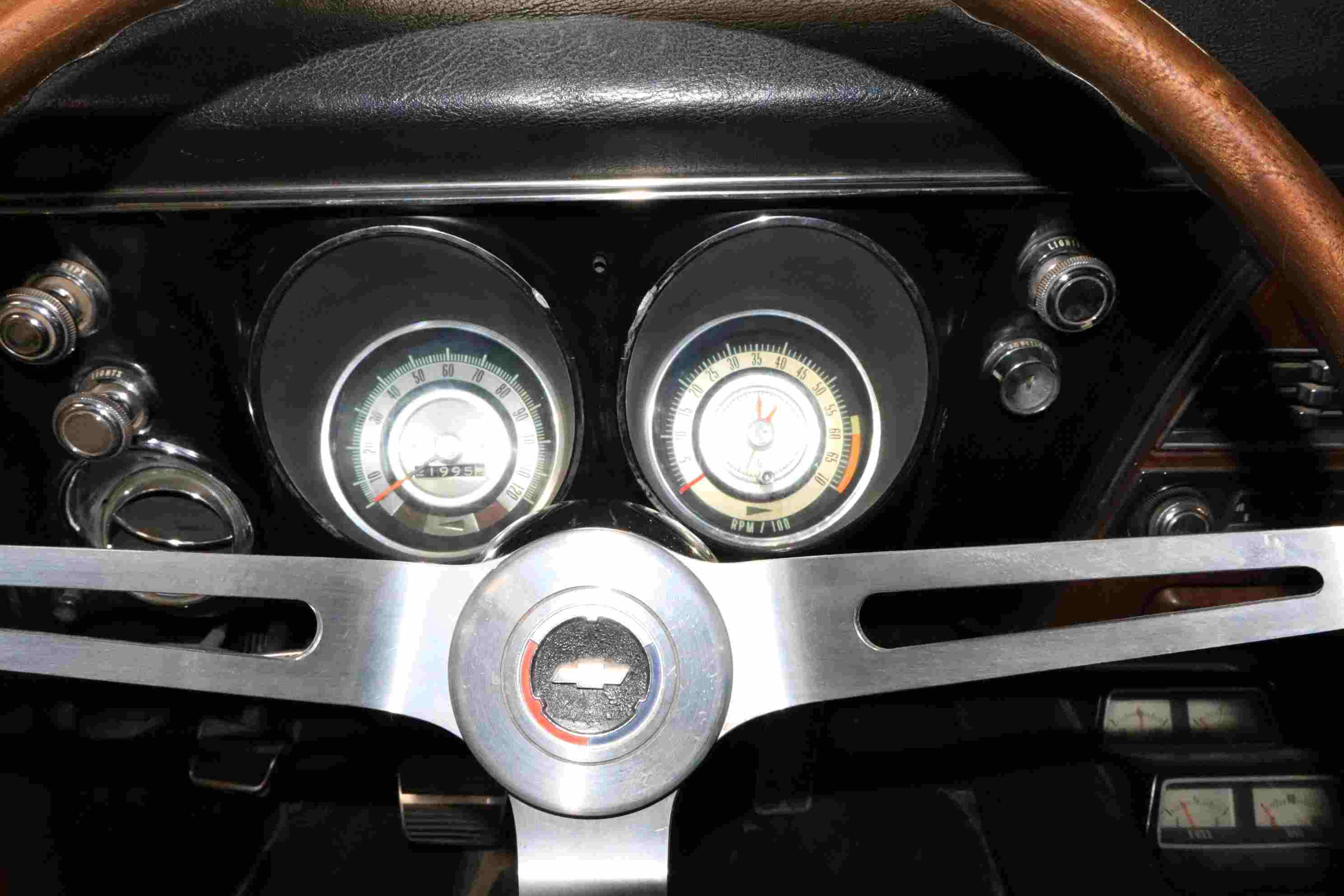 |
| Corvette Bronze 1968 Z28 with Black Houndstooth interior and original 4.56 positraction rear axle. Photo credit: Joe Iaccino. | ||
The Z28 became a very popular option to order on Camaros for 1969. This was partially due to the racing success it was having, not only in the Trans-Am series, but also on the drag strip and on the street. One much needed upgrade for 1969 was use of a Hurst Competition Plus 4-speed shifter. Shifters in previous years were known to bind up, especially under hard acceleration. Three other changes for the 1969 model year included finned-aluminum valve covers, Z28 badging on the grille and tailpanel, and 15x7 rally-style wheels with E70-15 raised white-letter tires. The mandatory front-disc brakes included power-assist in 69 (also in 68). Many people think that 1969 Z28s received the Special Ducted Hood (RPO ZL2), but that is untrue. The cowl hood was an option and most cars came with flat hoods. Many also think that all 1969 Z28s received front and rear spoilers, but spoilers were optional until April 69.
The initial price for the Z28 package at the start of the model year was $458.15, but it changed a few times. On January 1, 1969 the price increased to $473.95. Starting April 1, RPO D80 (spoilers on the front valence and rear deck panel) became part of the Z28 package. That increased the cost to $506.50. Starting on May 19, 1969 chrome exhaust tips were included, increasing the cost to $522.40.
A new brake option was released for 69, derived directly from Trans-Am racing. The JL8 4-wheel power disc brake option was only produced during a limited timeframe, from Feb 69 to May 69, but it was a true competition-derived option, back when four-wheel discs were limited to exotic foreign sport cars. Production was only 206 units with the price being a limiting factor - $500.30 was alot for an option. Especially since most Z28s were driven on the street where the benefits were minimal.
At the beginning of the 1969 model year, tachometers were optional for Z28s. A tach became a mandatory extra-cost option as of January 1, so RPO U17 (special instruments: amp, temp, oil pressure, fuel, clock, tach) and RPO D55 (console with floor mounted shifter, stowage compartment, ashtray, rear seat courtesy light) had to be ordered with Z28. Chevrolet may have lifted the tach requirement at some point (or at least was very strict in this requirement), as there are many documented spring-of-69-built cars without a tachometer. The U16 tachometer (which did not require gauges or console) became a cheaper tachometer option alternative in January. However, U16 was not available right away and was on production hold as of February 1969. The delay was probably due to the new center fuel gauge had to be designed and tooled. The earliest documented cars with U16 are in late May. The standard Z28 tachometer redline and maximum RPM values changed during the model year.
Early 69 model year production Z28s received chambered exhaust. Some police departments issued tickets for excessive noise on cars with the early chambered exhaust sytems, so the exhaust system was modified. Effective November 25, 1968, the chambered exhaust system was discontinued as the standard exhaust system on Z28s. It could still be ordered as RPO NC8 until mid-May when it was discontinued. This is explained further in the Chevrolet Dealer Service Technical Bulletin 69-T-8 on chambered exhaust.
There is no coding on the body tag of Los Angeles-produced or early Norwood-produced Camaros to identify it as a Z28. Starting in the second week of December 1968, Norwood cars received the X33 or X77 codes, to denote the car as a Z28. Cars coded X33 also received either RPO Z21 (Exterior Style Trim Group) or RPO Z22 (Rally Sport Package). Z21 includes bright wheel-opening moldings, bright drip moldings, rear fender louvers, black body sill, headlight bezel accents, and tail light accents. X77-coded cars were not built with RPO Z21 or RPO Z22, but over the years some owners have added these to their cars. More on X codes here: 1969 cowl tag - X codes.
The only engine code for the 302 in the 1969 model year is DZ. Z28 production for 1969 (with the Camaro model year extended into November 1969) reached 20,302 units.
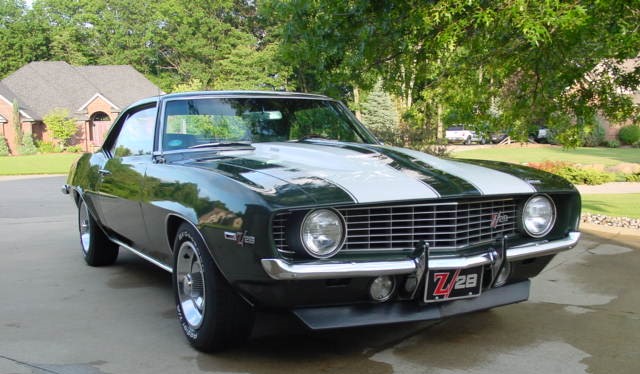
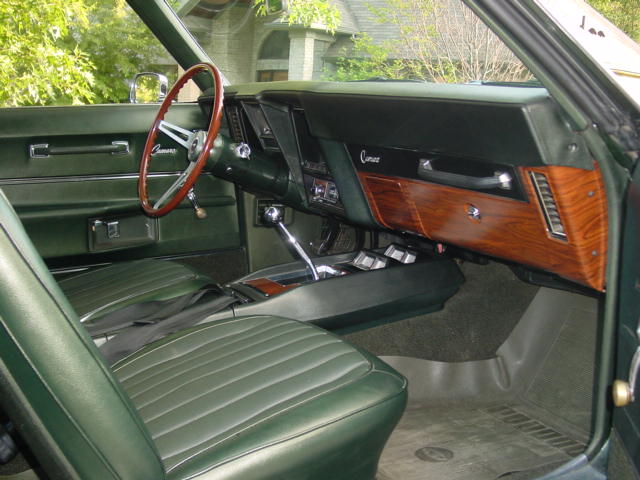
The 1969 Camaro Z28 shown below was previously owned by the late long-time CRG expert, John Hinckley. This is a highly-optioned original Z28. John bought it in 2000 and the body was all-original metal; it never had any panel replacements or rust. It received undercoat when new at the Canadian dealership it was shipped to. The deluxe interior was all original and the exterior paint was 80 percent original.
 |
 |
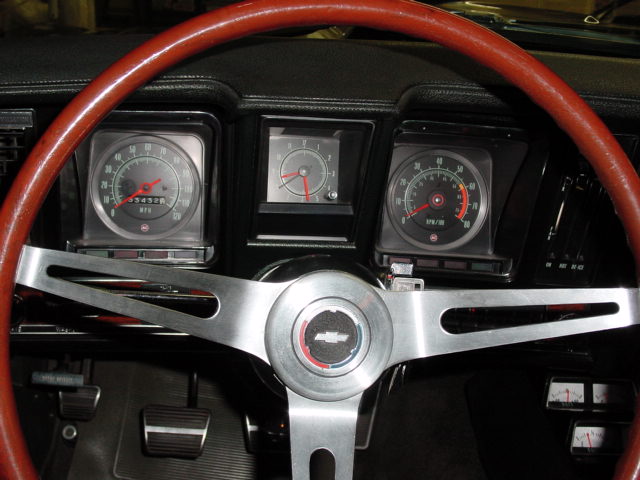 |
| Fathom Green 1969 Z28 with Midnight Green deluxe interior. Photo credit: John Hinckley. | ||
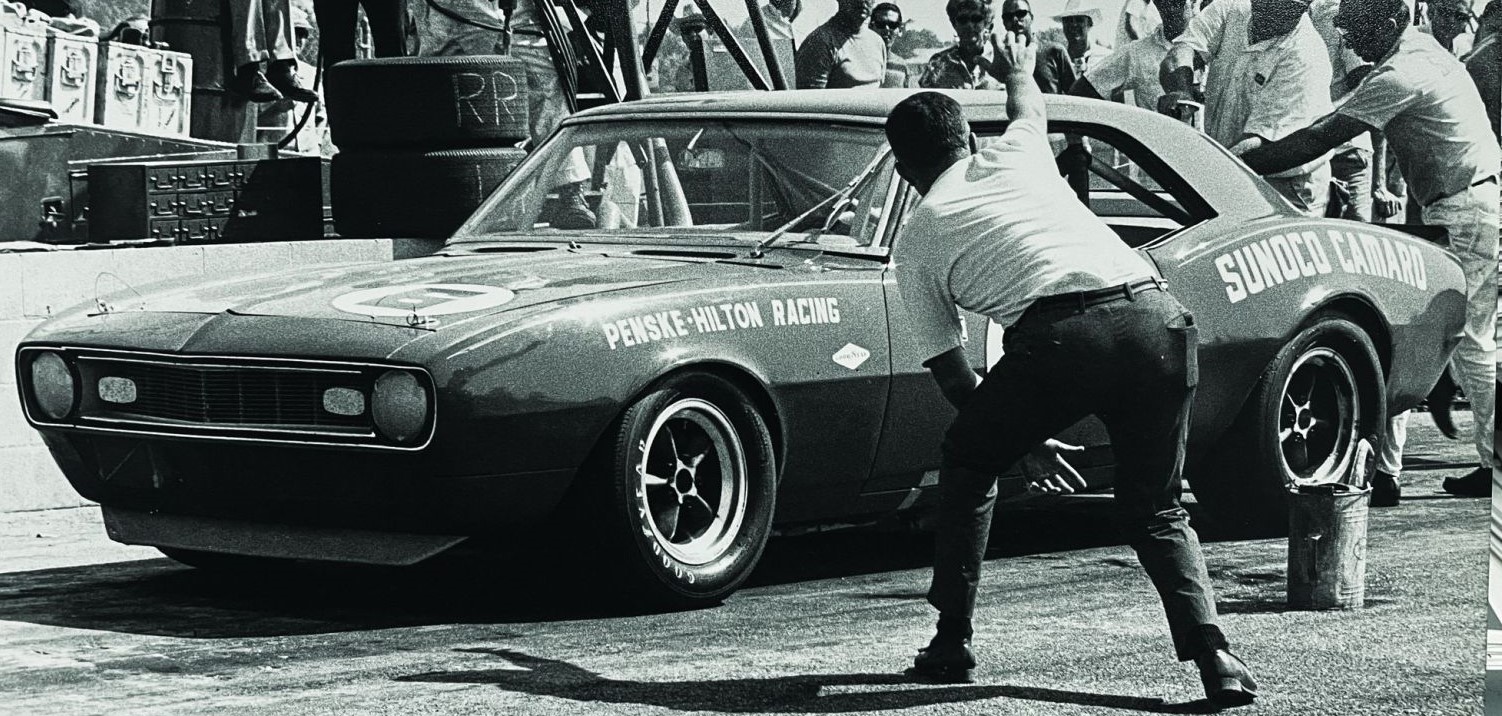
Many famous and winning racers competed in the Trans-Am series. Dick Guldstrand was the first to win a race with the Camaro Z28. Other famous racers used the Z28 from 1967 to 1969, including Mark Donahue, Ronnie Bucknum, Sam Posey, and Johnny Moore.
|
|
Jon Mello moderates the Trans-Am section of the CRG forum. There is a treasure trove of information there, including information about special racing parts used. A cross-ram dual four-barrel intake manifold and two 600 cfm carburetors became available from dealerships for the 1968 race season. These were quite rare, and mostly for off-road Trans-Am use, but they could also be ordered through any parts department. The cross-ram was never available installed on cars by the vehicle assembly plants, nor was it was shipped in the trunk. Jon wrote an article on cross-ram intake manifolds.
For road racing, brakes are a crucial component. To support the Z28 in Trans Am racing, a four-wheel disc brake system was released in March of 1968 as over-the-counter (OTC) heavy-duty service parts. Though included in the 1968 assembly manual and in the POP option field information, JL8 was not a 1968 production option. A modified version of the OTC 1968 system was released in 1969 for production as RPO JL8, 4-Wheel Power Disc Brakes. The option was only produced during a limited timeframe, from Feb 69 to May 69, and production was only 206 units. More information on JL8 and brake systems is available in the CRG suspension section.
Wayne Guinn's book Camaro Untold Secrets is an excellent source for information on rare performance parts, including heavy-duty JL8 disc-brake axles.
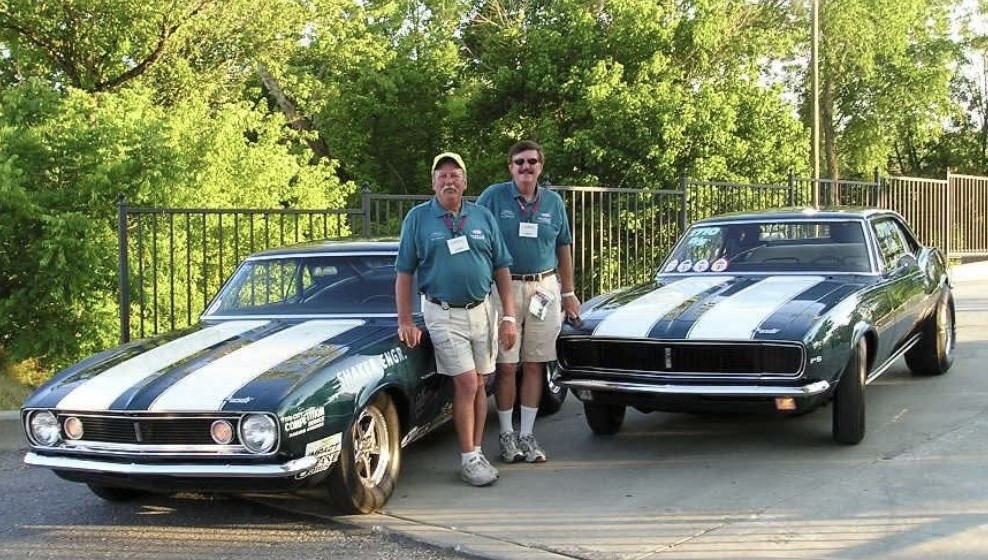
The Camaro Z28 was also a winning combination at the drag strip when equipped with deep (high ratio, such as 4.56 and 4.88) rear-end gears. Dave and Ben Wenzel bought a new 1967 Z28 and took it almost immediately to the track. They won the NHRA Nationals in the stock class at Indianapolis on Labor Day weekend 1967. This was the first Camaro to win an NHRA stock class national event. They were still racing it as of 2025. Dave Strickler succesfully raced a 1968 Z28 in NHRA for several years. Many others have successfully campaigned Z28 Camaros at drag strips all over the country. With even deeper gears than were available from the factory (such as 5.13 ratio or higher)and sticky tires, you can get incredible off the line response.
|
This project involved input from many CRG members. The authors would like to thank all of them for their input.
|


|